How to choose and run large print word searches in memory care
A word search that suits a general audience can be too hard to see, too crowded, or too long for someone living with dementia. The puzzle itself does not need to change much. Five choices make most of the difference: print size, grid size, word direction, word list length, and theme. How the activity is run matters as much as the puzzle.
Print size
The American Printing House for the Blind sets 18 point as the minimum for a document to count as large print, and recommends sans-serif type with no serifs, black text on white or a light cream paper, and no gray text. Puzzle books labeled large print vary in the size of their grid letters, so check the stated point size before buying.
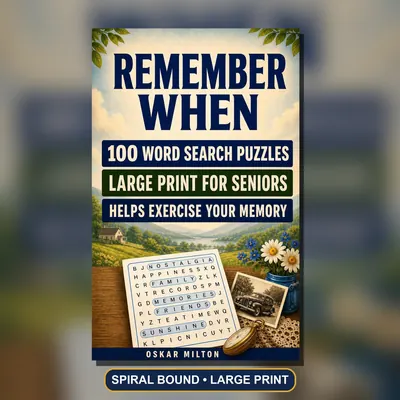
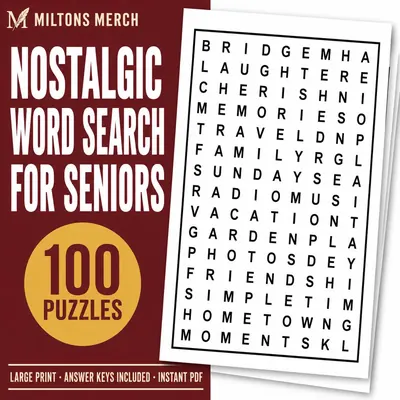
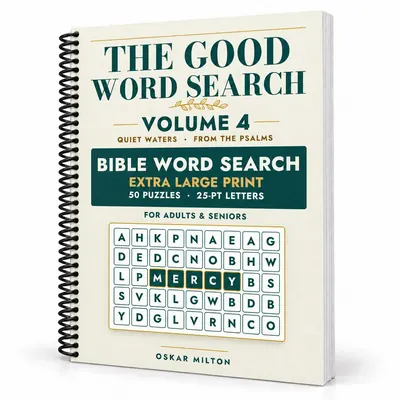
For memory care, larger than 18 point is often easier. Grids with 22 to 25 point bold letters leave more space between rows and columns, which helps a solver keep their place. On this site, the Remember When Volume 2 pack uses 15 x 15 grids in 18-point bold type, and The Good Word Search volumes use 25-point grid letters with the grid alone on its own page.
Grid size and crowding
A 15 x 15 grid has 225 letters. That is manageable for many residents in assisted living, and a lot for someone in the middle stages of dementia. Smaller grids, or a full page given over to one grid, reduce crowding. If a puzzle prints with the word list squeezed below the grid, consider printing the grid and reading the list aloud instead.
Word direction
Words that read left to right and top to bottom are the easiest to find. Diagonal and backward words add difficulty that rarely helps in a memory care group. When a puzzle states which directions it uses, tell the group before starting: "All the words go across or down."
Length of the word list
For a group session, a list of 10 to 15 words keeps the activity from running long. A longer list is fine for an independent solver who enjoys the challenge, but for a group it stretches the activity past the point where attention holds. Nothing is lost if the group stops before the list is finished.
Themes
Familiar themes do two jobs. They make words easier to recognize, and they give the group something to talk about. Kitchens, school days, old songs, holidays, seasons, and household chores tend to prompt stories. Faith-based groups often respond to well-known psalms and hymns. Avoid themes built on recent pop culture or slang that residents are unlikely to know.
Running it as a group
The Alzheimer's Association advises caregivers to focus on enjoyment rather than achievement, to break activities into simple steps, and to pay attention to time of day. Those points apply directly to a puzzle session.
- Read the list first. Read each word aloud and ask a question about it before anyone starts searching. "Pot roast. Who made pot roast on Sundays?" Some sessions spend most of their time on the list, and that still counts as a good session.
- Pair people up. One person can hold the pencil while another spots letters. Staff or volunteers can point to the row where a word starts.
- Let the finding count, not the finishing. Celebrate each word found, and collect the sheets without counting how many words are left.
- Use the same format repeatedly. A puzzle that looks like last week's is easier to start. The Alzheimer's Association notes that more repetitive tasks can suit people as the disease progresses.
- Pick the time of day. The Alzheimer's Association notes that caregivers may have more success with some activities at certain times of day. Note when your group is most alert and schedule puzzles then.
Printing tips
Print at Actual Size or 100 percent, not Fit to Page, so the letters stay at their intended size. Use plain white or cream paper rather than glossy stock, and print in black. A clipboard or a book that lies flat keeps the page still for residents with tremor or limited grip.