Nursing home activity documentation: what F679 asks for
This page is general information for activity staff. It is not legal or compliance advice. Survey guidance changes, and states add their own rules, so check the current CMS State Operations Manual, Appendix PP, and your state agency before changing your department's policies.
The rule
The federal activities requirement for nursing homes is in 42 CFR 483.24(c). Surveyors cite it under tag F679. Paragraph (c)(1) requires the facility to provide an ongoing program of activities based on each resident's comprehensive assessment, care plan, and preferences. The program supports group, individual, and independent activities that meet residents' interests and support their physical, mental, and psychosocial well-being.
Paragraph (c)(2), cited as F680, sets the qualifications for the person who directs the program: a qualified therapeutic recreation specialist or an activities professional who meets one of several criteria, such as eligibility for certification, two years of experience in a social or recreational program within the last five years, being a qualified occupational therapist or assistant, or completion of a state-approved training course.
How CMS defines activities
CMS guidance for F679 defines activities as "any endeavor, other than routine ADLs, in which a resident participates that is intended to enhance her/his sense of well-being." The intent statement describes an ongoing, resident-centered program that incorporates each resident's interests, hobbies, and cultural preferences. The guidance also describes creating opportunities for a meaningful life by supporting each resident's domains of well-being, which the 2022 update to Appendix PP lists as security, autonomy, growth, connectedness, identity, joy, and meaning.
The practical result is that a surveyor looks at whether the activities a resident is offered connect to what is known about that person, not only at whether a calendar is posted.
The records that show it
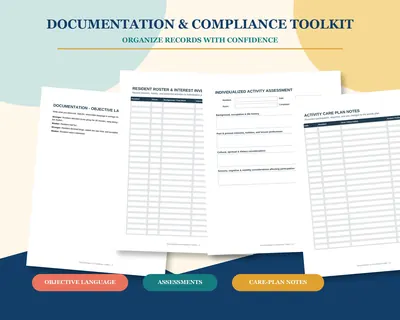
Documentation is how the department shows that the program is individualized. Most activity departments keep four kinds of records.
1. Interest assessment
An assessment of each resident's interests, routines, and history, completed on admission and updated when the resident's condition changes. The MDS includes activity preference items in Section F (Preferences for Customary Routine and Activities), and many departments supplement it with a longer interest inventory covering past work, faith, music, hobbies, and roles in family and community.
2. Care plan entries
Activity goals and approaches written for the specific resident. "Will attend activities of choice" says little. "Will join the Tuesday hymn sing; staff to offer a large print song sheet and seat her near the piano" tells the team what to do and gives the surveyor something to observe.
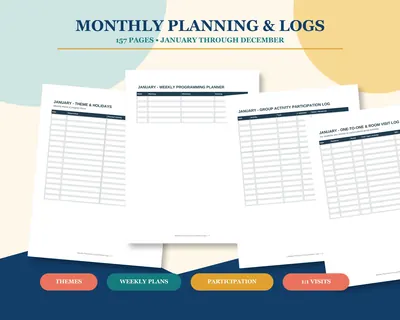
3. Participation records
Records of group, one-to-one, and independent activity, with the resident's response. One-to-one and room visits matter most for residents who do not attend groups. When a resident declines, note what alternative was offered.
4. Periodic review
A regular review of whether the plan is working, usually timed with the MDS assessment schedule, with changes made when interests, abilities, or health change.
Common gaps
- An interest assessment on file that does not match the activities in the care plan.
- Care plan approaches copied from resident to resident.
- Participation logs that record attendance but not response or engagement.
- Residents who do not leave their rooms with no one-to-one plan.
- Repeated refusals recorded with no alternative offered.
Keeping it manageable
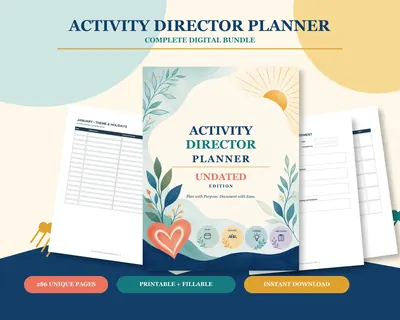
The work is easier with forms that follow the same order as the process: assessment, plan, participation, review. Undated forms can be reused each year. The documentation toolkit and monthly logs sold on this site are organized that way, with fillable PDF versions for typing and print-and-write versions for clipboards.